Saturday, 14 May 2022

Trip away from SS15 – Wales (part 3)

On 9th May 2022, I visited the following sites: 

RWT Gilfach near Rhayader, Powys

RSPB Carngafallt near Rhayader, Powys

Gigrin Farm near Rhayader, Powys

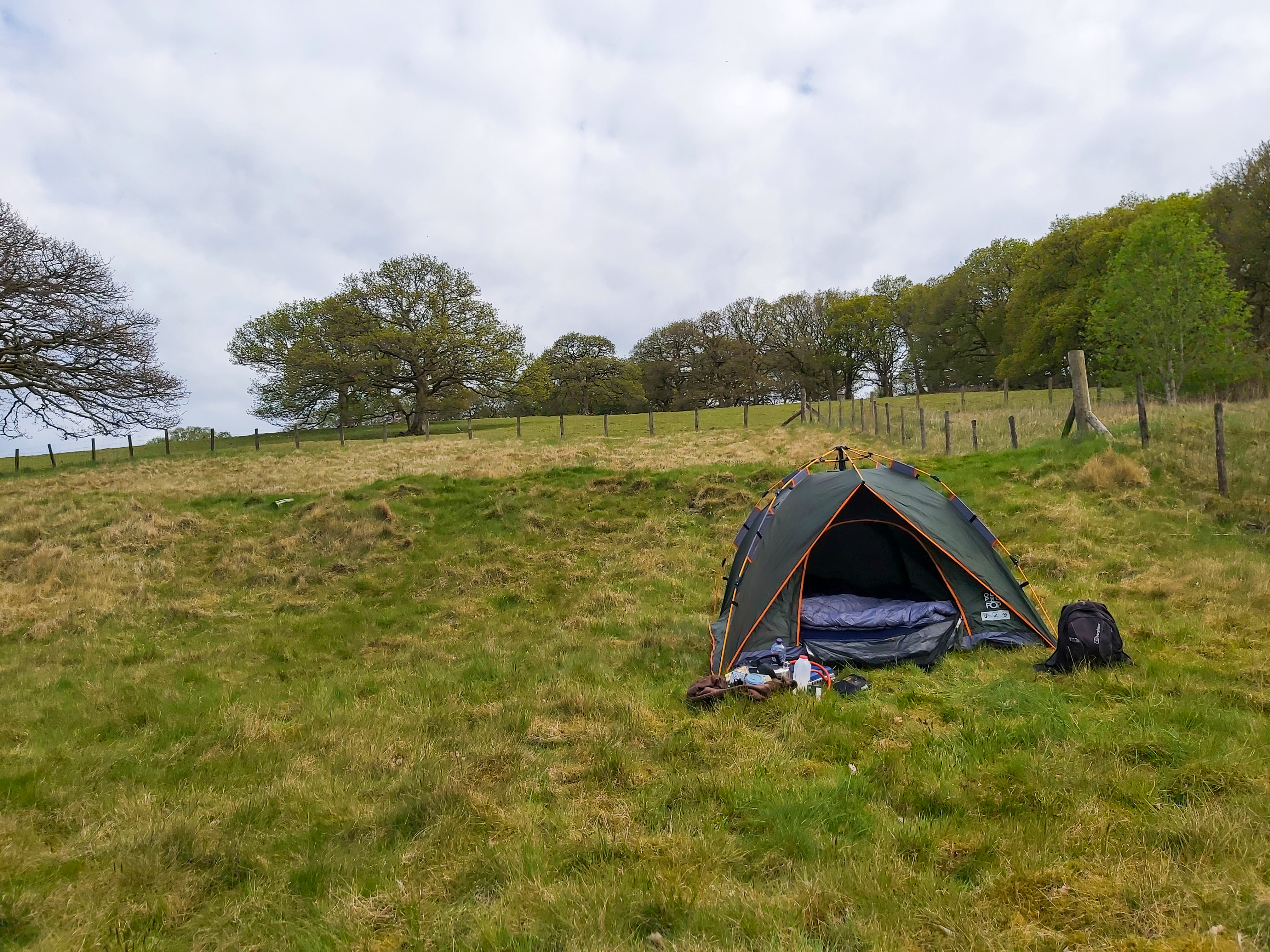
After being woken up by a male Tree Pipit singing on the fence right outside my tent and the dawn chorus at around 4:30 a.m., I packed up and drove 6 miles to RWT Gilfach.

For centuries, RWT Gilfach was a working hill farm but now it is a spectacular nature reserve tucked away in the Marteg valley in the heart of rural Mid Wales. The old farm buildings are used as visitor facilities and a series of way-marked trails provide access to the woodlands, rough grazing areas and heather moorland. A hide close to the reserve entrance overlooks the River Marteg.

RWT Gilfach is another of my favourite sites in Wales for its beautiful scenery and excellent wildlife and it is now always included on my trip itineraries.

The highlights, amongst 29 species recorded during my visit, were as follows (heard only records in italics): Dipper (2, possibly a pair, seen from the hide), Goosander (2), Red Kite (2), Sparrowhawk (1 female), Raven (2), Common Redstart (2 singing males), Pied Flycatcher (1 singing male), Tree Pipit (2), Cuckoo (2 calling males), Garden Warbler (2), Willow Warbler (2 singing males and 3 other singing males heard), Chiffchaff (2 singing males and 3 other singing male heard), Blackcap (2 singing males and 1 other singing male heard), Nuthatch (1), Goldcrest (2 singing males and 1 other singing male heard), Mistle Thrush (1), Great Spotted Woodpecker (1), Brown Hare (1), Grey Squirrel (1)

Addition to my 2022 year list: Dipper


Photo: RWT Gilfach


Photo: RWT Gilfach


Photo: Dipper


Photo: Dipper


Photo: Red Kite


Photo: Red Kite


Photo: Nuthatch


Photo: Swallow


Photo: Swallow


Photo: male Blackbird


Photo: Brown Hare


Photo: Grey Squirrel

After visiting RWT Gilfach, I drove back to Rhayader and then took a circular minor road from Elan village via Llanwrthwl which passes through woodland and alongside the River Wye.

The highlights, amongst 22 species recorded along this short route, were as follows (heard only records in italics): Common Sandpiper (1), Grey Wagtail (1), Common Redstart (1 male), Tree Pipit (1 singing male), Wood Warbler (4 singing males), Willow Warbler (3 singing males), Chiffchaff (4 singing males), Blackcap (1 singing male), Swallow (2), Red Kite (1), Common Buzzard (2)

Additions to my 2022 year list: Common Sandpiper, Grey Wagtail

RSPB Carngafallt, accessed from Elan village, primarily comprises oak woodland with many ancient trees plus wood pasture and its special birds can easily be heard and seen by just walking along the road.

The highlights, amongst 15 species recorded during my visit, were as follows (heard only records in italics): Common Redstart (2 males and 2 other singing males heard), Wood Warbler (1 singing male and at least 1 other singing male heard), Pied Flycatcher (1 singing male and 2 other singing males heard), Willow Warbler (3 singing males), Blackcap (1 singing male), Red Kite (1), Nuthatch (1 and 1 other calling bird heard), Great Spotted Woodpecker (1)

Gigrin Farm is located just outside Rhayader and is a family run upland sheep farm of approximately 160 acres. The land is 700 feet rising to 1200 feet above sea level providing wonderful views of the Wye and Elan valleys.

Gigrin Farm became a Red Kite feeding station in the winter of 1992/93 following a request from the RSPB who had witnessed the late Mr Powell feeding the Red Kites as and when food (Rabbit) was available. The RSPB had noted this spectacle and came to Gigrin Farm with a proposal i.e. it should open to the public as a Red Kite feeding station as it would have a positive impact on the young Red Kites that were being lost over the winter and would also draw people away from nesting sites where losses were occurring due to disturbance.

Around 6 Red Kites were roosting on the farm at that time but by the winter of 2006 over 400 were coming in for food and now around 600 can be seen each day during the winter months. Gigrin Farm also acts as the Red Kite Rehabilitation Centre working in partnership with the Welsh Kite Trust. This allows Red Kites that have fallen ill or been injured to recuperate after having any required veterinary care elsewhere.

I have visited Gigrin Farm previously but this was my first visit for many years. On this occasion, I paid the additional fee for access to one of the photographic hides which provide an elevated and better perspective of the Red Kites coming in to feed. I was joined by a young photographer, Amy, and her Mum who provided good company and conversation during our visit.


Red Kite feeding is an amazing spectacle and provides unrivalled views of one of our most beautiful raptors. The photographic opportunities are incredible if not slightly overwhelming as huge numbers of birds come down to the food scattered around for them.

During my visit, there must have been at least 150 Red Kites which were joined by probably at least 5 Common Buzzards and a few Carrion Crows and Rooks but surprisingly no Ravens.

Initially, the Red Kites flew high over the feeding area, gradually increasing in numbers and gathering much closer as 2 p.m. approached ....


Photo: Red Kites


Photo: Red Kites


Photo: Red Kites


Photo: Red Kites


Photo: Red Kite


Photo: Red Kites


Photo: Red Kites


Photo: Red Kites


Photo: Red Kites


Photo: Red Kites
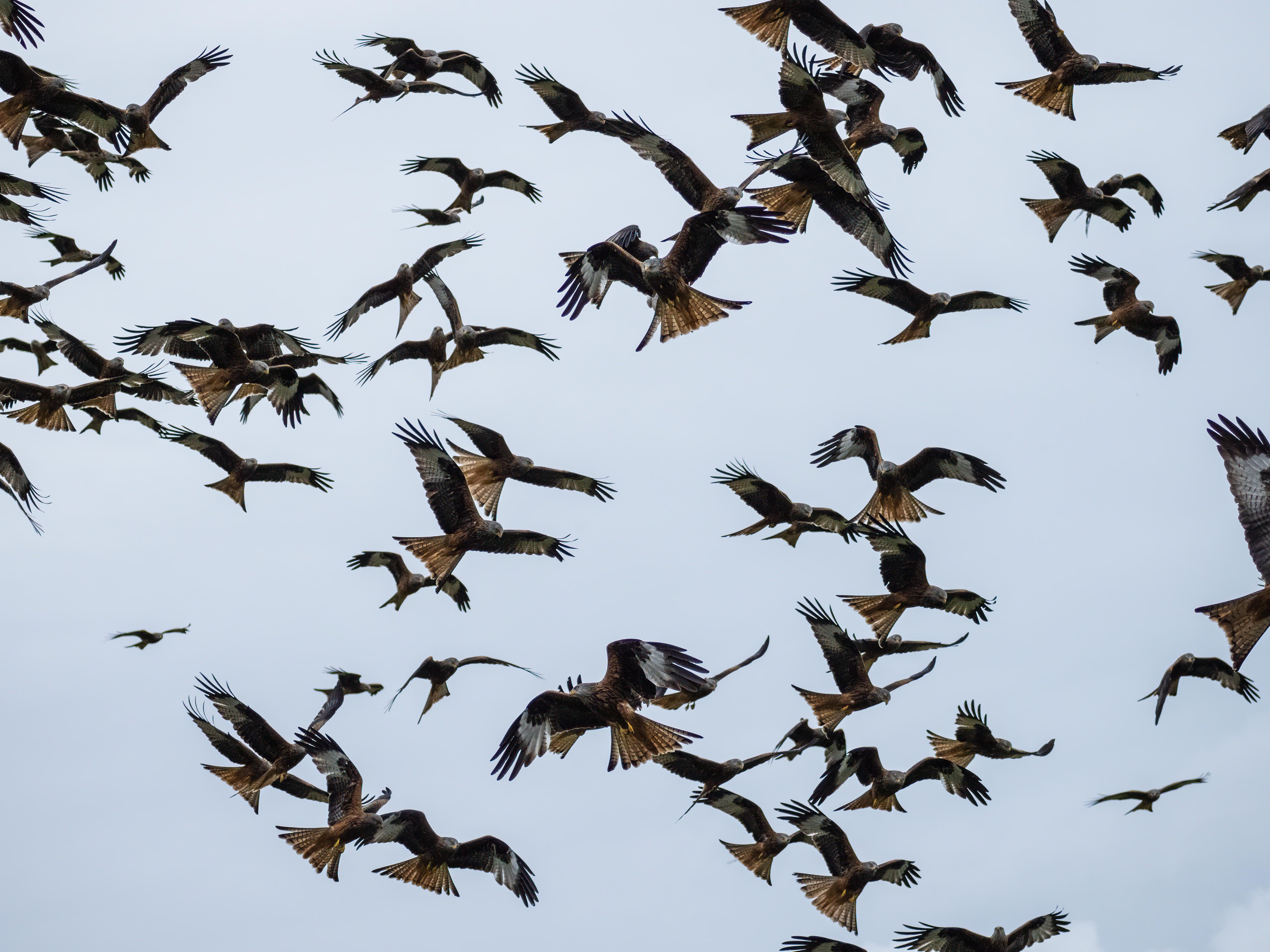
Once the tractor carrying the meat appeared, excitement levels increased significantly amongst the Red Kites (and the assembled observers and photographers) and a feeding frenzy commenced as soon as the food was thrown out across the feeding area ....


Photo: Red Kites


Photo: Red Kites


Photo: Red Kites

Eventually, the feeding frenzy subsided and photography of individual or small groups of Red Kites either feeding on scraps of food or still flying over the feeding area became much easier ....


Photo: Red Kite


Photo: Red Kite


Photo: Red Kite


Photo: Red Kites


Photo: Red Kite


Photo: Red Kites


Photo: Red Kites


Photo: Red Kites


Photo: Red Kite


Photo: Red Kites


Photo: Red Kites


Photo: Red Kite


Photo: Red Kite


Photo: Red Kite


Photo: Red Kite


Photo: Red Kites


Photo: Red Kite and Rooks


Photo: Red Kite


Photo: Red Kite


Photo: Red Kite


Photo: Red Kite


Photo: Red Kite


Photo: Red Kite


Photo: Red Kite


Photo: Red Kite


Photo: Red Kite


Photo: Red Kite


Photo: Red Kite


Photo: Red Kites


Photo: Red Kite


Photo: Red Kite


Photo: Red Kite


Photo: Red Kite


Photo: Red Kite


Photo: Red Kite


Photo: Red Kite


Photo: Red Kite


Photo: Red Kite


Photo: Red Kite


Photo: Red Kite


Photo: Red Kite


Photo: Red Kite


Photo: Red Kite


Photo: Red Kite


Photo: Red Kite


Photo: Red Kite


Photo: Red Kite


Photo: Red Kite


Photo: Red Kite


Photo: Red Kite


Photo: Red Kite


Photo: Red Kite


Photo: Red Kite


Photo: Red Kite


Photo: Red Kite


Photo: Red Kite

Finally, everything quietened down. Some Red Kites flew off whilst others retired to the nearby trees to digest their meals ....


Photo: Red Kites

After spending over 3 hours at Gigrin Farm, I drove for around 1.5 hours to my campsite …. Cae Glas Camping. En-route, I saw my first Swifts of the year, 2 birds flying over Builth Wells.

Cae Glas Camping is located just outside Pen-y-Cae on the southern edge of the Brecon Beacons National Park. The campsite is on a working farm and comprises a field plus showers and toilets and costing £12.50 per night. I received a warm welcome from Mel who showed me around. I was the only person camping there.

Whilst a lovely campsite with beautiful views of the surrounding mountains, I did not get much sleep due to the appalling overnight weather. Extremely heavy rain and strong winds started just after 9 p.m. and continued to around 4 a.m. when I finally got off to sleep. I was then woken up by a loudly calling male Cuckoo at around 6 a.m.!

Campsite records (heard only records in italics): Cuckoo (1 calling male), Willow Warbler (1 singing male), Stonechat (1 calling bird), Green Woodpecker (1 calling bird), Swallow (2), Robin, Blackbird, Dunnock, Magpie


Photo: Cae Glas camping


Photo: Cae Glas camping


Photo: Cae Glas camping

Slava Ukraini! …. Glory to Ukraine!

💚🦆 🦉🦋🐝🦊🦡🌼 🌳💚
Stay safe, stay well, stay strong, stay connected with nature

Trip away from SS15 – Wales (part 2)

On 8th May 2022, I visited the following sites:

RSPB Lake Vyrnwy in the Berwyn Mountains, Powys

RSPB Ynys-Hir near Machynlleth, Powys

MWT Dyfi Osprey Project near Machynlleth, Powys

Llyn Clywedog near Llanidloes, Powys

RWT Gilfach  near Rhayader, Powys

RSPB Lake Vyrnwy is a reservoir built in the 1880s to supply Liverpool with fresh water. The reserve covers the lake itself plus the surrounding woodlands, moorlands and streams.

I didn’t spend much time at RSPB Lake Vyrnwy other than the Coed y Capel bird hide and feeding station and a drive along the western shore of the lake on the way to Dinas Mawddwy and onwards to RSPB Ynys-Hir and the MWT Dyfi Osprey Project on the west coast.

However, the highlights, amongst 18 species recorded during my visit, were as follows (heard only records in italics): Mandarin (3 males), Goosander (male and female), Mallard (3), Canada Goose (5), Cuckoo (1 calling male), Willow Warbler (c.5), Chiffchaff (c.5), Siskin (c.20), Coal Tit (2), Great Spotted Woodpecker (1)

Addition to my 2022 year list: Mandarin


En-route to Dinas Mawddwy, I saw 2 Common Buzzards and a male Stonechat plus I heard a singing male Common Redstart and several singing male Willow Warblers, Chiffchaffs and Blackcaps.


RSPB Ynys-Hir is situated on the Dyfi estuary with the mountains of southern Snowdonia to the north and the Cambrian mountains to the south. There is an extensive range of habitats at RSPB Ynys-Hir including oak woodland, estuary saltmarsh, lowland wet grassland, freshwater pools, reedbeds and peat bog and this provides for a wide variety of species.


RSPB Ynys-Hir has been one of my favourite sites in Wales for many years and it is almost always included on my trip itineraries.

The highlights, amongst 38 species recorded during my visit, were as follows (heard only records in italics): Pied Flycatcher (4 males and 1 other singing male heard), Common Redstart (1 singing male), Garden Warbler (1 singing male), Common Whitethroat (1 singing male), Sedge Warbler (2 singing males plus 2 other singing males heard), Willow Warbler (3 singing males), Chiffchaff (4 singing males), Blackcap (1 singing male plus 4 other singing males heard), Swallow (1), Treecreeper (1), Nuthatch (1), Great Spotted Woodpecker (1), Goldcrest (5 singing males), Stonechat (1 male), Great White Egret (1), Lapwing (2), Oystercatcher (2), Common Redshank (1), Cormorant (1), Mallard (1 male), Canada Goose (c.100), Moorhen (2), Brown Hare (1), Grey Squirrel (1), Speckled Wood (1)

Additions to my 2022 year list: Pied Flycatcher, Garden Warbler

Addition to my Wales list: Great White Egret

The major disappointment was not hearing or seeing any Wood Warblers but this has been the case on my last few visits to RSPB Ynys-Hir.


Photo: RSPB Ynys-Hir


Photo: RSPB Ynys-Hir


Photo: RSPB Ynys-Hir


Photo: male Pied Flycatcher


Photo: male Pied Flycatcher


Photo: male Pied Flycatcher


Photo: male Pied Flycatcher


Photo: male Pied Flycatcher


Photo: Robin


Photo: Robin


Photo: Grey Squirrel


Photo: Grey Squirrel


Photo: Grey Squirrel

The MWT Dyfi Osprey Project lies just 3 miles to the north of RSPB Ynys-Hir. It is a conservation project at the Cors Dyfi nature reserve under the management of the Montgomeryshire Wildlife Trust and is primarily dedicated to the protection of a breeding pair of Ospreys which can be watched on site or via a live YouTube stream.

In 2011, for the first time in over 400 years, Ospreys bred in the Dyfi valley at the Cors Dyfi nature reserve following 3 years work to reintroduce them into the area.

On 18th April 2014, Montgomeryshire Wildlife Trust opened a brand new, 3 floor £1.4m observatory. From the upper viewing level, over 30 feet above the bog below, the building provides a full 360 degree view of the Cors Dyfi nature reserve and Dyfi valley with the Plynlimon mountains and Snowdonia National Park beyond …. plus the nesting Ospreys.

In addition to the headlining Ospreys, a Beaver enclosure has been set up in partnership with the Welsh Beaver Project …. see here and here.

The highlights, amongst 22 species recorded during my visit, were as follows (heard only records in italics): Osprey (male and female), Hobby (1), Reed Warbler (4 singing males), Sedge Warbler (1 singing male and 1 other singing male heard), Willow Warbler (1 singing male), Chiffchaff (1 singing male), Blackcap (1 singing male), Common Whitethroat (1 singing male), Cuckoo (1 calling male), Swallow (3), Cetti’s Warbler (3 singing males), Reed Bunting (1 male), Great Spotted Woodpecker (1), Lesser Redpoll (1), Grey Heron (1), Canada Goose (6), Common Lizard (8), Large Red Damselfly (1)

Additions to my 2022 year list: Osprey, Hobby


Photo: Ospreys


Photo: Ospreys


Photo: Ospreys


Photo: Ospreys


Photo: Ospreys


Photo: Common Lizard


Photo: Common Lizard


Photo: Common Lizard


Photo: Common Lizard


Photo: Common Lizard

After spending some time at the MWT Dyfi Osprey Project, I drove over the mountain road from Machynlleth to Llyn Clywedog, another Osprey nesting site but one which I had not previously visited.

Llyn Clywedog is a reservoir formed by the construction of the Clywedog Dam which was built between 1965 and 1967 to regulate the flow of water in the River Severn, both as a protection against flooding of the upper sections of the river during the winter months and also to ensure the maintenance of a minimum flow in the river during the summer.

After some difficulty, I eventually found the watchpoint and hide which provided distant telescope views of the Osprey nest.

The highlights, amongst 11 species recorded during my visit, were as follows (heard only records in italics): Osprey (1), Cuckoo (1 calling male), Tree Pipit (1 singing male), Garden Warbler (presumed pair), Chiffchaff (1 singing male), Goldcrest (1 singing male), Mistle Thrush (1), Brimstone (1)

After my short visit to Llyn Clywedog, I continued on to Rhayader where I saw at least 10 Red Kites flying over the town.

I drove to my campsite from Rhayader via the narrow moorland road that passes RWT Gilfach, the location of my planned visit early the next morning. This provided sightings of 2 further Red Kites and a male Common Redstart.

Babylon Wild Campsite is located in a remote area about 10 miles north of Rhayader. It would have been impossible to find it had Nancy not sent me detailed directions via e-mail. Babylon Wild Campsite really is a wild campsite simply comprising a steeply sloping field behind Nancy’s house with no facilities, hence the cost of only £5 per night. I was the only person camping there.

My pitch provided me with a panoramic view of the surrounding upland landscape and a beautiful sunset and sunrise. In addition, it was excellent for birds including a male and female Tawny Owl both calling in the middle of the night and a Tree Pipit leading the dawn chorus at 4:30 a.m. A continually calling Peacock from a farm way across the other side of the valley did not make it as a legitimate record on to my trip list!

Campsite records (heard only records in italics): Red Kite (at least 5), Common Buzzard (at least 2), Raven (2), Common Redstart (1 singing male), Tree Pipit (2), Swallow (2), House Martin (c.15), Chiffchaff (1 singing male), Tawny Owl (male and female heard calling), Mallard (1 male flew over), Lesser Redpoll (c.5), Mistle Thrush (1), Great Spotted Woodpecker (1 heard calling), Red Fox (a very distant view through my binoculars of 2 animals possibly hunting Rabbits and being mobbed by a Common Buzzard and 2 Red Kites)


Photo: Babylon Wild Campsite


Photo: Babylon Wild Campsite


Photo: view from Babylon Wild Campsite


Photo: view from Babylon Wild Campsite


Photo: view from Babylon Wild Campsite


Photo: view from Babylon Wild Campsite


Photo: view from Babylon Wild Campsite


Photo: view from Babylon Wild Campsite


Photo: view from Babylon Wild Campsite

💚🦆 🦉🦋🐝🦊🦡🌼 🌳💚
Stay safe, stay well, stay strong, stay connected with nature