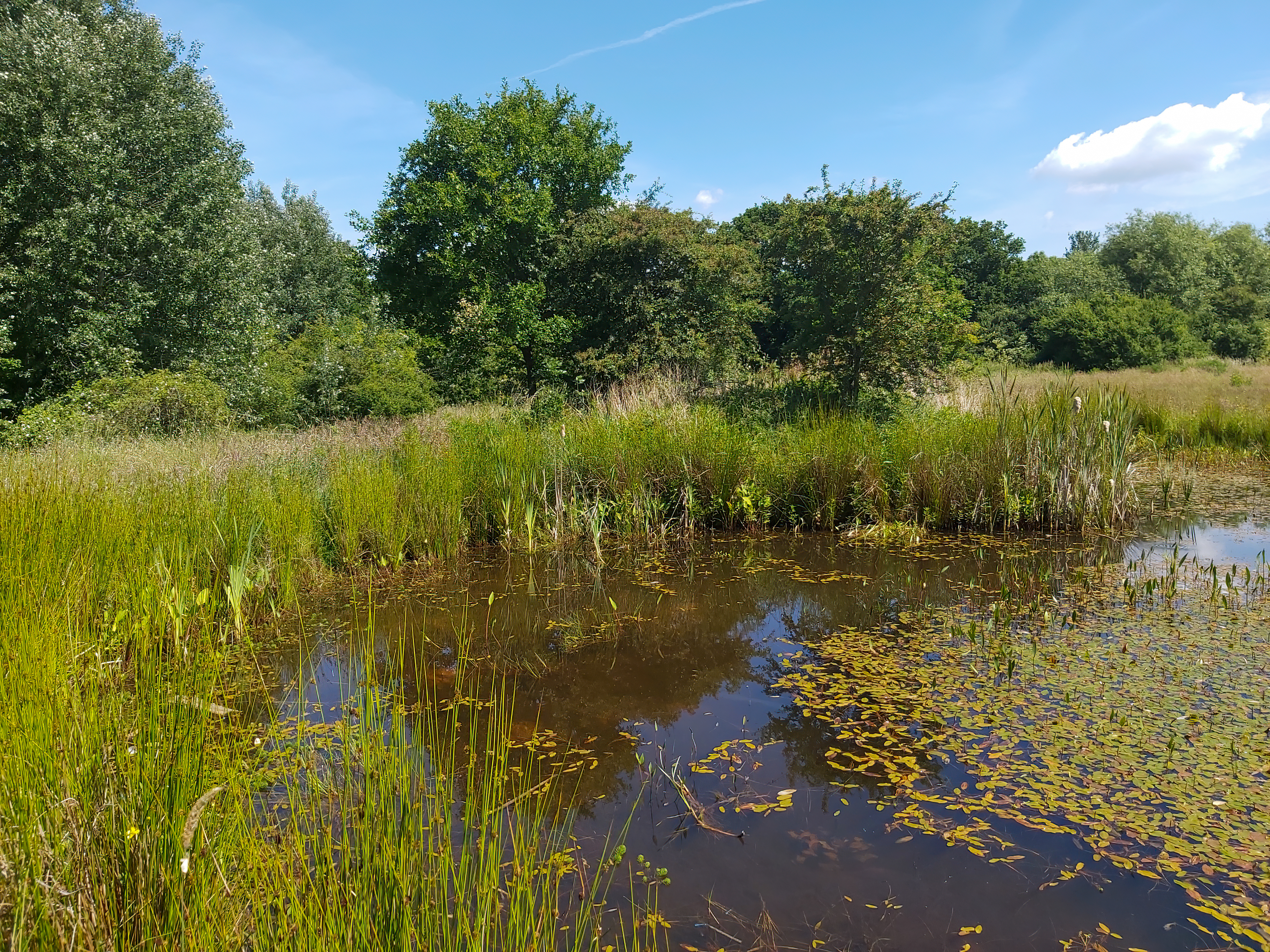
On 13th June 2022, I visited the following sites:
Snettisham Coastal Park near Snettisham, Norfolk
NWT Weeting Heath near Brandon, Suffolk
Cowles Drove near RSPB Lakenheath Fen, Suffolk
Snettisham
Coastal Park is an area of foreshore on The Wash, scrub, sandy grassland and reedbeds to the north of RSPB Snettisham and Wild Ken Hill, another incredibly inspiring rewilding
project where BBC 2 Springwatch was being broadcast from during my visit to the area.
Whilst I
have visited RSPB Snettisham many times before, this was my first
visit to Snettisham Coastal Park and the main reason for doing so was to
see a male Great Reed Warbler that was first reported on 16th May 2022.
The Great Reed Warbler resembles the Reed Warbler in colouration
but it is far larger with a proportionately more massive head, heavy bill with
a dark tip and a broad, pale eyebrow. It breeds in reedbeds and marshes in much
of Europe but not in the UK where it is an irregular visitor.
As I approached the
location of the bird, I immediately recognised its loud and raucous song but it
took around 30 minutes for it to show at the top of one of the reed stems. Fortunately,
whilst I waited, I had a panoramic view over the wonderful wetlands of Wild Ken Hill and the woodland beyond.
I have seen Great
Reed Warblers in several European countries but this was my first record in
the UK and therefore an addition to my UK life list taking it to 354 species and
to my Norfolk list taking it to 263 species.
Although I had excellent
and extended telescope views of the Great Reed Warbler once it
eventually showed, unfortunately it was too distant to get any photos. However, here are some of my photos of Great Reed Warblers
that I took in Hungary in May 2017 ....
Photo: Great Reed Warbler south of Hortobágy towards Szásztelek, Hortobágy National Park, Hajdú-Bihar county, Hungary
Photo: Great Reed Warbler south of Hortobágy towards Szásztelek, Hortobágy National Park, Hajdú-Bihar county, HungaryIn
addition to the Great Reed Warbler, the highlights, amongst 41 species recorded during my visit, were as follows (heard only
records in italics): Turtle Dove (1 close to the entrance to the
footpath and my first sighting of the year), Lesser
Whitethroat (1), Common Whitethroat (1 singing male plus 2 other
singing males heard), Chiffchaff (5+ singing males), Blackcap (5+ singing males), Reed
Warbler (2 plus 5+ singing males), Sedge
Warbler (2 plus 5+ singing
males), Cetti’s Warbler (5 singing males), Reed
Bunting (2 males), Swallow (2), Swift (c.20), Cuckoo (1 calling male), Stonechat (2), Linnet (c.10), Skylark (1 singing
male), Meadow Pipit (2), Marsh
Harrier (1), Spoonbill (9), Grey Heron (2), Avocet
(c.15), Oystercatcher (3), Lapwing (c.10), Mallard (c.10), Mute Swan (1), Greylag
Goose (c.50), Coot (c.10)
I also saw a single Roe
Deer from the footpath on my return to the car.
After a
very successful visit to Snettisham Coastal Park, I drove around 1 hour
south to NWT Weeting Heath.
NWT Weeting Heath is a 141.8-hectare reserve which is managed by the Norfolk Wildlife Trust. It is a Site
of Special Scientific Interest and a National Nature Reserve
and it is also part of the Breckland Special
Area of Conservation and a Special Protection Area. NWT Weeting Heath is the best
site in the country to see the rare breeding Stone Curlew. The species
requires open, stony ground with short vegetation to breed, making the
close-cropped grass and lichen heath of NWT Weeting Heath an ideal site.
As well as the Stone Curlew, NWT Weeting Heath is also home to a range of other heathland and woodland species.
My main target species was the Stone Curlew, a bird that I usually
record at NWT Weeting Heath each year but had not done so since 2019 due
to the travel restrictions imposed by the Covid-19 health pandemic. It was good
to catch up with this enigmatic species and I quickly found 4 birds from the
western hide albeit views were a little hampered by the heat haze which is
always an issue at this site. Nonetheless, I did manage to get some heavily cropped
record photos.
Photo: Stone Curlew
Photo: Stone CurlewIn
addition to the Stone Curlew, the highlights, amongst 14 species recorded during my visit, were as follows (heard only
records in italics): Spotted Flycatcher (1), Marsh Tit (1), Chiffchaff
(1 singing male), Blackcap (2 singing males), Lapwing (2),
Stock Dove (2), Skylark (1 singing male)
Additions to my 2022 year list: Stone
Curlew, Spotted Flycatcher
I also saw a single Grey Squirrel
acrobatically balanced on the bird feeders.
Photo: Spotted Flycatcher
Photo: Spotted Flycatcher
Photo: Grey Squirrel
I did not have
time for the long walk around nearby RSPB Lakenheath Fen so instead I drove along the long unmade
track known as Cowles Drove to where it joins the River Little Ouse.
This is an
area that I have had previously had some success in seeing Turtle Doves
although on this visit I could not find any.
However,
it was a productive visit and the highlights, amongst 12 species recorded during my visit, were as follows (heard only
records in italics): Hobby (2), Marsh Harrier (2), Common
Buzzard (2), Cuckoo (1 calling male), Swallow (2),
Common Whitethroat (1 singing male), Reed Warbler
(at least 2 singing males), Sedge Warbler (at least 2
singing males), Reed Bunting (1 singing male), Yellowhammer
(1 singing male), Great Spotted Woodpecker (1), Mute Swan (3)
In addition, I found and photographed
a group of around 10 Banded Demoiselles in one of the ditches adjacent to the track.
Photo: Banded Demoiselle
Photo: Banded Demoiselle
Photo: Banded Demoiselle
Photo: Banded Demoiselle
Photo: Banded Demoiselle
Photo: Banded Demoiselle
Finally,
several of the fields along the track had spectacular displays of poppies.


💚🦆 🦉🦋🐝🦊🦡🌼 🌳💚
Stay safe, stay well, stay strong, stay connected with nature