Sunday, 15 September 2024

Trip away from SS15 - RSPB Vange Marsh, Vange, Essex

This morning I visited RSPB Vange Marsh which is only 4 miles from my home and easily reached by local buses.

This was my first visit since 8th August 2024.

RSPB Vange Marsh is a mosaic of wetland habitats with fresh and saltwater lagoons attracting many breeding birds in spring and summer, passage migrant waders especially in late summer and autumn and large numbers of ducks in winter. There are no specific facilities in the way of a visitor centre or hides but nature trails and public footpaths allow viewing over the wetland areas.

The principal issue at RSPB Vange Marsh is that the views are towards the south so bright sunny days are problematic. In addition, birds are always very distant requiring a telescope (which on warm and sunny days creates even worse problems with heat haze) and photography opportunities are extremely limited.

I decided to visit RSPB Vange Marsh this morning due primarily to recent reports of a vagrant Lesser Yellowlegs plus Little Stints and Spotted Redshanks, both species which I have not recorded this year.

I was eventually successful in seeing the Lesser Yellowlegs in the south west corner of the lagoon. I initially spotted a roosting "suspect" which finally did the decent thing and woke up, preened and walked about before flying a short distance and dropping down out of view.

Lesser Yellowlegs is a medium-sized wader that breeds in the boreal forest regions of north America. It is a regular vagrant to western Europe including the UK with a few birds arriving each autumn (mostly between August and October) with the occasional individual overwintering.

This was my 8th record of Lesser Yellowlegs in the UK following my first record at East Tilbury in Essex on  7th February 1999 and my second record at RSPB Vange Marsh on 26th August 2016. My last record was at RSPB Frampton Marsh in Lincolnshire last year on 25th September 2023.

I was also successful in seeing a single Little Stint and 10 Spotted Redshanks, these species and the Lesser Yellowlegs taking my UK year list for 2024 to 187 species.

The notable sightings from my visit with regard to birds were as follows: Lesser Yellowlegs (1), Little Stint (1), Dunlin (1), Little Ringed Plover (2), Spotted Redshank (10), Common Redshank (2), Common Snipe (5), Ruff (7), Black-tailed Godwit (at least 100), Lapwing (at least 50), Avocet (at least 20), Curlew (10), Mute Swan (2), Canada Goose (1), Mallard (at least 50), Teal (at least 50)

In addition, I recorded the following dragonflies and butterflies: Emperor Dragonfly (2 or possibly 3), Ruddy Darter (1 male), hawker species (c.5), Common Blue (1 male), Small White (1)

Love nature .... act now
Restore and rewild our natural world
Please help save and enhance our laws that protect our environment and wildlife

💚🦆 🦉🦋🐝🦊🦡🌼 🌳💚
Stay safe, stay well, stay strong, stay connected with nature

Saturday, 14 September 2024

Utterly appalling and disgusting!

ITV News - RSPCA appeal in Essex after body of fox found tied up and bloody 

What sort of person gets some perverted joy from senseless cruelty to a beautiful Red Fox?

Love nature .... act now
Restore and rewild our natural world
Please help save and enhance our laws that protect our environment and wildlife

💚🦆 🦉🦋🐝🦊🦡🌼 🌳💚
Stay safe, stay well, stay strong, stay connected with nature

Friday, 13 September 2024

Visit to Noak Bridge Nature Reserve – 13th September 2024

Date: 13th September 2024

Time: from 9:20 a.m.

Weather: dry, sunny, light wind, 10°C to 13°C

It was slightly warmer than my visit to my St. Nicholas Church local patch site yesterday but, like that visit, I was still not expecting to see any butterflies, dragonflies and damselflies which have been my main focus for the last few months.

However, it proved to an excellent visit and I recorded the following:

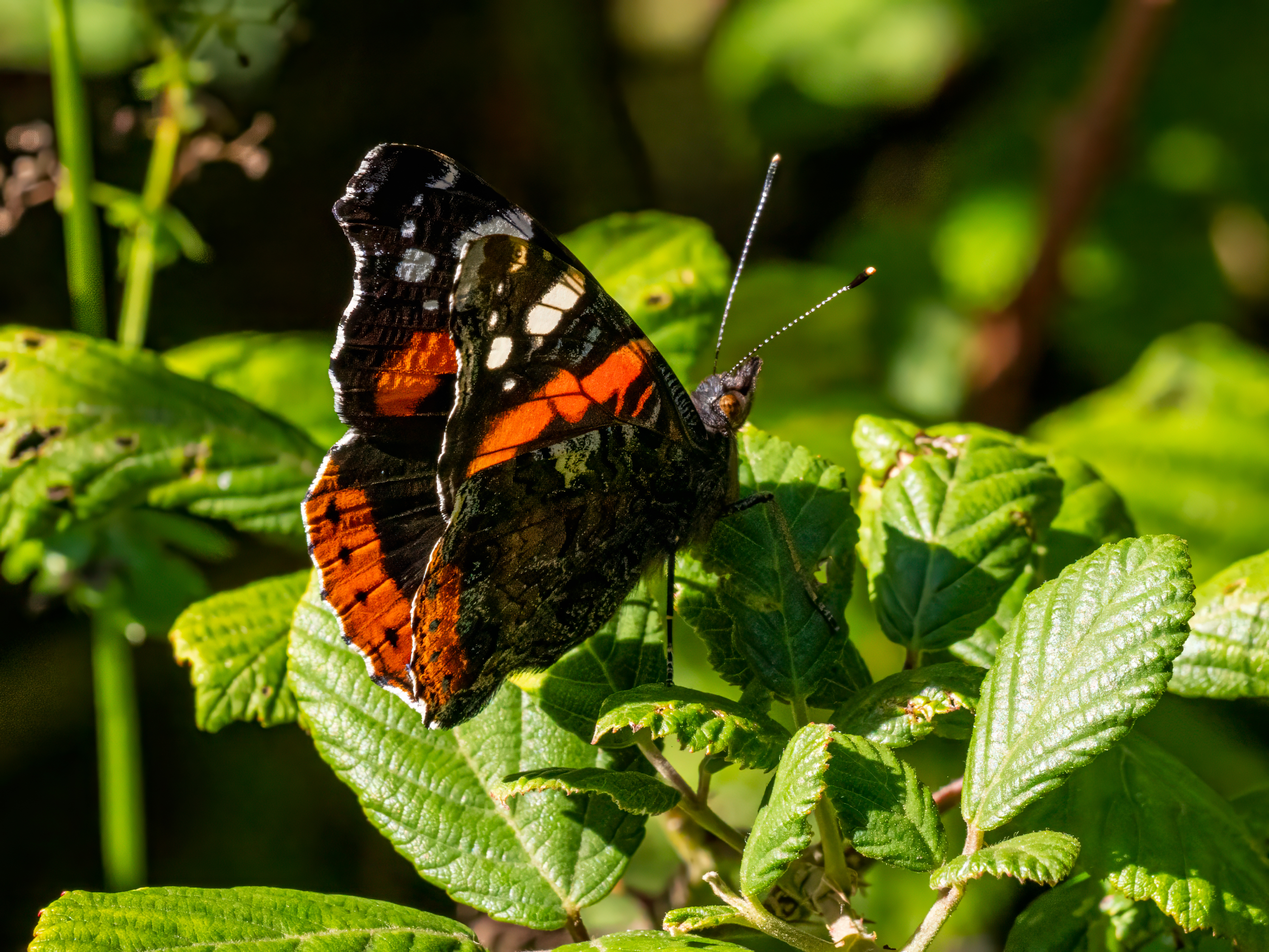
Butterflies: Comma (1), Red Admiral (4), Small White (1), unidentified blue species (1)

Dragonflies and damselflies: Emperor Dragonfly (1), Common Darter (4)

Red Admirals were particularly conspicuous, evidently feeding on the sugars produced by blackberries, and provided very good photo opportunities.

It was relatively quiet with regard to birds but at least one of the spring and summer visitors is still present: I saw a single foraging Chiffchaff at the start of the boardwalk in the eastern section of the reserve and remarkably heard a briefly singing male around Meadow Pond and heard another calling bird near the storage shed.

Other highlights included Moorhen (2 adults and 4 well-grown juveniles) and Mallard (female) seen on Willow Pond plus a fly-over Pied Wagtail seen at Meadow Pond.

Whilst at Meadow Pond, I also saw a large raptor species which unfortunately was flying away rather than in to the reserve air space! Although very pale, I believe that this was a Common Buzzard.

Finally, I saw 2 Grey Squirrels, the first in the woodland around the Spanish Steps and another running across the grassland of Thorny Wood.

On my walk over to the reserve, I heard a robustly singing male Chiffchaff between Asda and the A127 bridge. With another singing male on the reserve itself, clearly these birds are not aware that the breeding season is long over and that they should be preparing to migrate south or settling in for the winter!

Species recorded during this visit were as follows (heard only records in italics):

Chiffchaff

Blue Tit
Robin
Wren
Song Thrush
Goldfinch
Pied Wagtail
Jay
Magpie
Woodpigeon
Mallard
Moorhen

Grey Squirrel

Comma

Red Admiral
Small White

Emperor Dragonfly

Common Darter

Here are some photos from my visit ….


Photo: Red Admiral


Photo: Red Admiral


Photo: Red Admiral

Photo: Red Admiral


Photo: Red Admiral


Photo: Red Admiral


Photo: Comma


Photo: Small White


Photo: male Common Darter

Photo: female/immature Common Darter

Photo: female/immature Common Darter

Site totals for 2024 to date (2023 totals in brackets):

Birds = 36 (36)

Mammals = 3 (2)
Butterflies = 12 (15)  
Dragonflies and damselflies = 11 (11)
Reptiles = 0 (1)
Amphibians = 1 (2)

Total species list for the site:

Birds = 49

Mammals = 4
Butterflies = 22
Dragonflies and damselflies = 15
Reptiles = 2
Amphibians = 3

Love nature .... act now
Restore and rewild our natural world
Please help save and enhance our laws that protect our environment and wildlife

💚🦆 🦉🦋🐝🦊🦡🌼 🌳💚
Stay safe, stay well, stay strong, stay connected with nature

Thursday, 12 September 2024

Visit to St. Nicholas Church and surrounding areas –12th September 2024

Date: 12th September 2024

Time: from 8:20 a.m.

Weather: dry, sunny, light/moderate wind, 8°C to 11°C

Whilst very sunny, there was definitely an autumnal feel to my visit this morning with the lowest temperatures for many months. In fact, my fleece and winter-lined trousers had their first outing of the autumn/winter!

Given the low temperatures, I was not expecting to see any butterflies, dragonflies and damselflies which have been my main focus for the last few months. However, remarkably, I saw 2 Red Admirals on the wing, the first in the cemetery immediately adjacent to the church and the second in the northern section of the site.

Birds finally appeared to be more active following the summer lull with roving groups of Blue Tits, Great Tits and Long-tailed Tits being especially conspicuous, particularly in the bushes around the pond in the northern section of the site.

Spring and summer visitors are still present. I initially heard the contact call of a Chiffchaff in the bushes along the track from Larkins Tyres. I then saw a single Chiffchaff plus 2 male Blackcaps and a single female Blackcap foraging in bushes around the pond in the northern section of the site.

Other highlights included 2 separate sightings of a fly-over Common Buzzard in the northern section of the site (possibly the same individual), a single Great Spotted Woodpecker also in the northern section of the site and a Green Woodpecker heard distantly calling from the top of Church Hill.

Finally, with regard to mammals, I had a brief sighting of a single Red Fox running through the northern section of the site and a single Grey Squirrel in the same area.

Species recorded during this visit were as follows (heard only records in italics):

Blackcap

Chiffchaff
Blue Tit
Great Tit
Long-tailed Tit
Robin
Wren
Blackbird
Goldfinch
Common Buzzard
Green Woodpecker
Great Spotted Woodpecker
Jay
Magpie
Carrion Crow
Woodpigeon
Herring Gull

Red Fox

Grey Squirrel

Red Admiral

Site totals for 2024 to date (2023 totals in brackets):

Birds = 40 (47)

Mammals = 3 (3)
Butterflies = 17 (23)
Dragonflies and damselflies = 11 (12)
Reptiles = 0 (0)
Amphibians = 0 (0)

Total species list for the site

Birds = 65

Mammals = 7
Butterflies = 25
Dragonflies and damselflies = 14
Reptiles = 1
Amphibians = 0

Love nature .... act now
Restore and rewild our natural world
Please help save and enhance our laws that protect our environment and wildlife

💚🦆 🦉🦋🐝🦊🦡🌼 🌳💚
Stay safe, stay well, stay strong, stay connected with nature

Wednesday, 11 September 2024

The hardest thing about moving is not the people you leave behind – it’s the paths you’ll never walk again

The Covid-19 pandemic and the lockdown measures that were implemented, which at least provided an opportunity for daily "exercise", introduced me to what became and have continued to be my 2 local patches.

Since that time, I have regularly visited the area around St. Nicholas Church, immediately adjacent to where I live, and Noak Bridge Nature Reserve, a short 10 minutes walk away.

At some point within the next year or so, I intend to move home and, when I read this article, it resonated greatly with me given that I have become very aware of and received a lot of enjoyment from the environment and nature of my 2 local patches throughout the seasons and over the last 4 years.

The Guardian - The hardest thing about moving is not the people you leave behind – it’s the paths you’ll never walk again

Love nature .... act now
Restore and rewild our natural world
Please help save and enhance our laws that protect our environment and wildlife

💚🦆 🦉🦋🐝🦊🦡🌼 🌳💚
Stay safe, stay well, stay strong, stay connected with nature

Tuesday, 10 September 2024

Record from my flat - Red Foxes (again)

Regular visits from what I have assumed are 2 or 3 Red Fox cubs to the area around my flat continue.

Last night, compared with several previous nights, I was woken up at the rather later time of 5:30 a.m. by the "geckering" of at least 2 Red Foxes with this vocalisation continuing for several minutes.

Initially, I failed to see them but I then saw a single Red Fox trot past the flats and disappear down the side. A few minutes later, I saw another Red Fox sat on the path outside the houses opposite the flats. It kept looking in the direction of where its presumed sibling had gone. Eventually, it walked to the side of the road and had a long drink from a puddle of water before starting to walk towards the flats. It encountered one of the local cats but both animals completely ignored each other although they must have been very aware of their "neighbour".

Surprisingly, this morning's experience continued at 9:25 a.m., when I again heard the "geckering" and vocalisation of at least 2 Red Foxes in the wooded area beyond the houses opposite. At the same time, I briefly saw a Red Fox slowly walking around the grassy footpath that runs adjacent to the flats and the houses. Therefore, there were at least 3 Red Foxes in the immediate area of my flat.

Love nature .... act now
Restore and rewild our natural world
Please help save and enhance our laws that protect our environment and wildlife

💚🦆 🦉🦋🐝🦊🦡🌼 🌳💚
Stay safe, stay well, stay strong, stay connected with nature

Monday, 9 September 2024

Records from my flat - Tawny Owls (again) and Red Foxes (again)

My night time wildlife experience of recent weeks continues.

After my last record on 3rd September 2024, I again heard both male and female Tawny Owls on 9th September 2024, the former "hooting" for a few minutes from 1 a.m. followed by the latter calling shortly afterwards and fairly regularly until around 1:30 p.m.

I have now recorded Tawny Owls on 9 dates since their return to the immediate vicinity of my flat after many years ....

28th/29th July 2024 .... male "hooting" briefly at 9:45 p.m. followed by a few minutes of a female calling; male "hooting briefly again at 2 a.m. followed by a female calling for at least 10 minutes; female calling regularly for around 5 minutes from 3:05 a.m. (first record of Tawny Owl for many years)

30th July 2024 .... male "hooting" regularly for around 10 minutes from 3:45 a.m.

31st July 2024 .... male "hooting" briefly at 11:40 p.m.

1st August 2024 .... female calling briefly at 9:20 p.m.

5th August 2024 .... male "hooting" briefly at 11:55 p.m. followed immediately by a female calling

18th August 2024 .... male "hooting" several times in a 10 minute period from 10:25 p.m.

25th August 2024 .... male "hooting" twice at 3:20 a.m.

3rd September 2024 .... male "hooting" briefly at 11:30 p.m.

9th September 2024 .... male "hooting" for a few minutes from 1 a.m. followed by a female calling shortly afterwards and fairly regularly until around 1:30 p.m.

Regular visits from Red Foxes to the area around my flat continue with "geckering" and other vocalisation of at least 2 animals for several minutes from 9:50 p.m. on 7th September 2024 and the same for around 15 minutes from 2:15 a.m. on 9th September 2024. Unfortunately, I failed to see them.

Love nature .... act now
Restore and rewild our natural world
Please help save and enhance our laws that protect our environment and wildlife

💚🦆 🦉🦋🐝🦊🦡🌼 🌳💚
Stay safe, stay well, stay strong, stay connected with nature

Friday, 6 September 2024

Forgotten epidemic: with over 280 million birds dead how is the avian flu outbreak evolving?

New data reveals the virus has spread to endangered species in Antarctica, yet the risk of avian flu to biodiversity, farming and human health is little explored.

With at least 280 million birds dead since October 2021, the highly infectious H5N1 strain of avian flu has devastated poultry and additionally caused the biggest sudden drop of the world’s wild bird population in decades. The millions of wild birds also killed includes tens of thousands of endangered and endemic species plus tens of thousands of mammals have died too.

New data, published in Nature Communications, documents the spread of avian flu to the southernmost tip of the planet, the Antarctic region, where it has inflicted significant die-offs in Elephant Seals and Fur Seals.

This outbreak has affected every continent except Oceania and yet there has been little coverage of the impact on global biodiversity and farming systems …. or of potential risks to human health.

Many more disturbing facts and figures here …. The Guardian - Forgotten epidemic: with over 280 million birds dead how is the avian flu outbreak evolving?

Love nature .... act now
Restore and rewild our natural world
Please help save and enhance our laws that protect our environment and wildlife

💚🦆 🦉🦋🐝🦊🦡🌼 🌳💚
Stay safe, stay well, stay strong, stay connected with nature

Record from my flat - Red Foxes (again)

Regular visits from Red Foxes to the area around my flat continue.

Last night, I was woken up at 1:30 a.m. by the "geckering" of at least 2 Red Foxes with this vocalisation continuing for several minutes. Unfortunately, I failed to see them.

Love nature .... act now
Restore and rewild our natural world
Please help save and enhance our laws that protect our environment and wildlife

💚🦆 🦉🦋🐝🦊🦡🌼 🌳💚
Stay safe, stay well, stay strong, stay connected with nature

Thursday, 5 September 2024

Wild Ken Hill, Norfolk

Wild Ken Hill is an immensely inspiring project in north west Norfolk combining rewilding, traditional wildlife conservation, profitable regenerative agriculture and eco-tourism …. see here.

It has also been the base for BBC Springwatch, BBC Autumnwatch and BBC Winterwatch in recent years.

I have only visited Wild Ken Hill on one occasion .... SS15 wildlife watching: Trip away from SS15 – Norfolk and Lincolnshire

Opponents of rewilding schemes often frame their argument in terms of the loss of valuable farmland providing food and the loss of rural employment opportunities. Nothing could be further from the truth, quite apart from the fact that rewilding schemes deliver essential benefits in tackling the climate emergency and biodiversity crisis.

Watch the video .... Vimeo - Wild Ken Hill

Love nature .... act now
Restore and rewild our natural world
Please help save and enhance our laws that protect our environment and wildlife

💚🦆 🦉🦋🐝🦊🦡🌼 🌳💚
Stay safe, stay well, stay strong, stay connected with nature

Tuesday, 3 September 2024

Record from my flat - Red Foxes and Tawny Owl

My night time wildlife experience of recent weeks continues.

On 2nd September 2024 at 8:35 p.m., I had another visit from at least 2 Red Foxes to the area in the near vicinity to my flat. Whilst I heard their excitable vocalisation, I failed to see them. At least this time, they turned up at a more reasonable time rather than waking me up in the middle of the night!

After my last record on 25th August 2024, I again heard a male Tawny Owl "hooting" briefly on 3rd September 2024 at 11:30 p.m.

I have now recorded Tawny Owls on 8 dates since their return to the immediate vicinity of my flat after many years ....

28th/29th July 2024 .... male "hooting" briefly at 9:45 p.m. followed by a few minutes of a female calling; male "hooting briefly again at 2 a.m. followed by a female calling for at least 10 minutes; female calling regularly for around 5 minutes from 3:05 a.m. (first record of Tawny Owl for many years)

30th July 2024 .... male "hooting" regularly for around 10 minutes from 3:45 a.m.

31st July 2024 .... male "hooting" briefly at 11:40 p.m.

1st August 2024 .... female calling briefly at 9:20 p.m.

5th August 2024 .... male "hooting" briefly at 11:55 p.m. followed immediately by a female calling

18th August 2024 .... male "hooting" several times in a 10 minute period from 10:25 p.m.

25th August 2024 .... male "hooting" twice at 3:20 a.m.

3rd September 2024 .... male "hooting" briefly at 11:30 p.m.

Love nature .... act now
Restore and rewild our natural world
Please help save and enhance our laws that protect our environment and wildlife

💚🦆 🦉🦋🐝🦊🦡🌼 🌳💚
Stay safe, stay well, stay strong, stay connected with nature

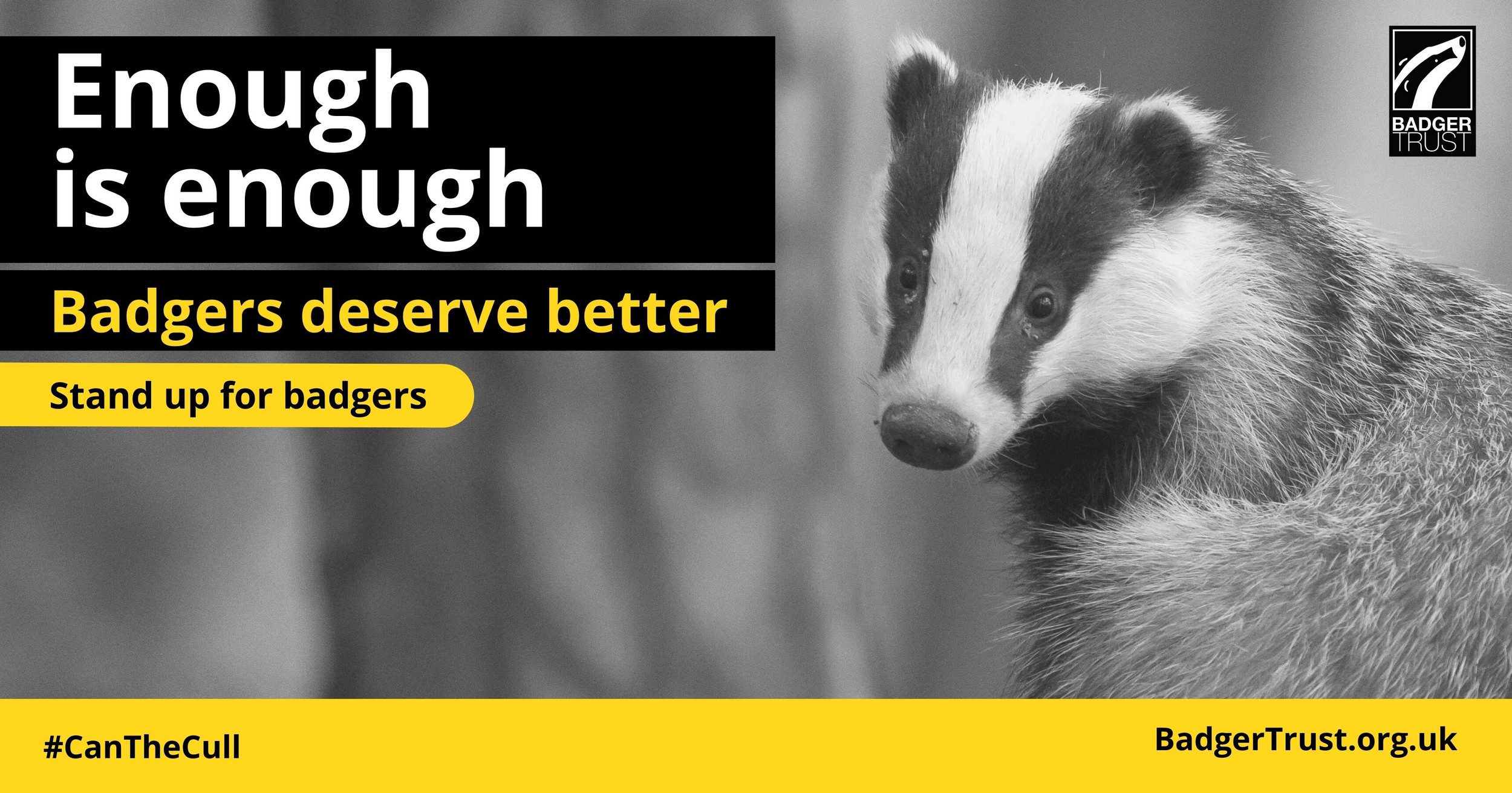
Badger Trust - National Day of Action against the Badger cull

I have written many times regarding the appalling cull of Badgers which has resulted (to date) in over 230,000 animals, half the estimated population, being killed since 2012 in a failed attempt to control bovine TB in farmed cattle.

SS15 wildlife watching: Excellent news on the Badger cull (hopefully) .... the Labour Party vows to end it

SS15 wildlife watching: Badger cull

However, despite their election manifesto commitment to end the Badger cull, the new Labour Government is already watering down its commitment stating that the scientifically flawed and appalling policy will end "within 5 years".

BBC News - Badger culling to end in England within five years

DEFRA - Government announces TB Eradication Strategy refresh to end the Badger cull

Waiting another 5 years is simply not good enough!

END THE BADGER CULL! .... NOW!

How many more Badgers need to die as innocent victims when the proven solutions to eradicating bovine TB lie within vaccinating cattle, improved animal welfare and improved bio-security?

On 3rd September 2024, the Badger Trust held a National Day of Action against the Badger cull which I attended in London.


There were many passionate, and indeed angry speeches, from many people, not least Chris Packham and Dominic Dyer, both of whom I have heard speak on many occasions on the Badger cull plus many more issues relating to wildlife and the environment.


Photo: Chris Packham - campaigner and TV presenter


Photo: Dominic Dyer - Born Free Foundation and former CEO of the Badger Trust


Photo: Rachel Bigsby - wildlife photographer and Badger Trust Youth Ambassador


Photo: Rosie Wood - Badger Trust Chair of Trustees


Photo: Rob Pownall - founder of Protect the Wild


END THE BADGER CULL! .... NOW!

Love nature .... act now
Restore and rewild our natural world
Please help save and enhance our laws that protect our environment and wildlife

💚🦆 🦉🦋🐝🦊🦡🌼 🌳💚
Stay safe, stay well, stay strong, stay connected with nature